
In the UK we are very lucky to have a fully-functioning and modern sewage system which means we do not have to give much thought about what happens to the sewage and wastewater we produce. But what happens when that system develops a problem? At CountyClean, we help homeowners and businesses across London and the South of England keep their drains, sewers and treatment systems running smoothly.
Due to population growth, accelerated urbanisation and economic development, the quantity of wastewater generated and its overall pollution load are increasing globally.
In developing countries where sewage systems are not as advanced, open trench drainage channels transport waste from the home to treatment facilities. Some countries do not even have the luxury of functioning wastewater treatment facilities.
This lack of sanitation adversely affects social and economic development and is a source of environmental pollution and a health hazard.
Globally it is estimated that over 80% of wastewater is released to the environment without adequate treatment (UNESCO, 2017).
The History of Sewage Systems in Britain
The history of the sewer is not the cleanest although it has come a long way!
Up until the 1800’s, the River Thames was essentially an open sewer in which London’s sewage system discharged into. This basic sewage system was simply open ditches running to the River Thames. In the 1800’s as London’s population started to grow, there were several cholera epidemics which unfortunately killed many people, it was thought that these outbreaks of disease were caused by contaminated air or ‘miasma’.
During the hot summer of 1858, also known as the “Great Stink of London”, the hot temperatures created an intolerable stench from the River Thames, this prompted planning to create a modern sewerage system.
The stench along with the frequent occurrence of cholera gave the push needed for work to start on improving the sewer system. Joseph Bazalgette, a civil engineer was elected Chief Engineer of the Metropolitan Board of Works to design and complete the work.
An extensive underground sewerage system was designed to divert waste to the Thames Estuary, downstream of the main centre of the population. The flow of foul water from old sewers and underground rivers was intercepted and diverted along the new low-level sewers which were built behind embankments on the riverfront to take the sewage to the new treatment works.
The system revolutionised the way we deal with our sewage and brought forward a great advance in the hygiene of our population. Once this was completed it was mirrored and reproduced across the UK.
The Modern Sewage System
Our modern sewerage system is essential in providing us with the quality of life we have come to expect. It provides us with a safe and hygienic way to dispose of waste which in turn protects us from the risk of infection and disease. It also means that we rarely smell or have sight of wastewater. Our excellent treatment of wastewater means we have reliable access to clean water for drinking and irrigation.
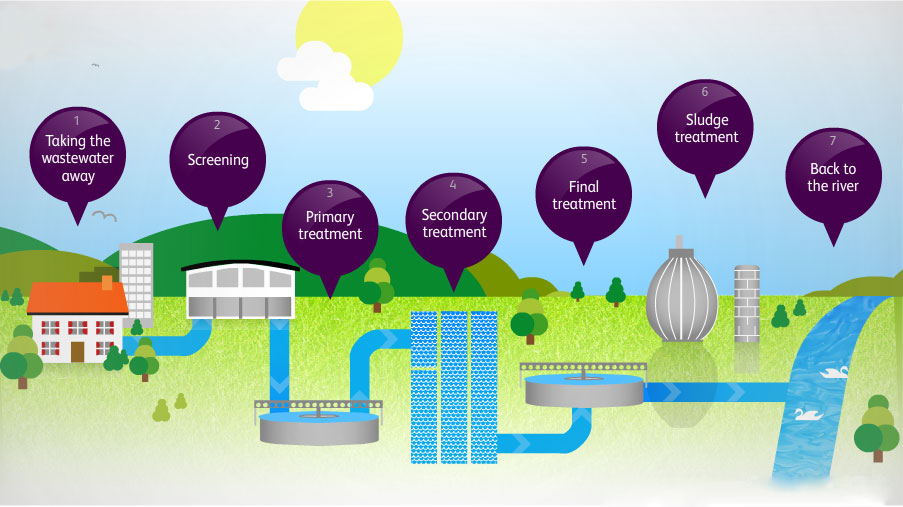
Here is how the modern system works:
- Wastewater is taken away – wastewater disposed of via toilets, sinks, showers or baths are channelled into underground foul water drains and sewers which lead to sewage treatment works.
- Screening – this stage removes objects that should never have been flushed in the first place including nappies, wipes, sanitary items, cotton buds and other large objects. Wastewater also usually contains grit and this is removed as part of this process.
- Primary treatment – at this point the wastewater will still contain human waste, this is separated at this stage. To do this the wastewater is put into large settlement tanks where the solids will sink to the bottom of the tank forming sludge, this is pushed towards the centre of the tank where it is pumped away for further treatment.
- Secondary treatment – this process will remove smaller particles and bacteria. The wastewater for this stage has air pumped into it which encourages good bacteria to break down the bad bacteria.
- Final treatment – The treated wastewater is now passed through a final settlement tank where the good bacteria sinks to the bottom creating more sludge. The clean water filters out of the top of the tank.
- Sludge treatment – most of the sludge collected from the start of the process will be treated and recycled for farmers to use on agricultural land and also used to generate energy.
- Back to the river – treated wastewater can now be returned to rivers and streams.
How are Sewers Maintained?
With a high population density, it is key to maintain these sewer and drainage systems to ensure we do not revert to the unsanitary conditions of the past. There are some simple steps everybody can take to keep the drains and sewers connected to your home clear — for example, by not flushing ‘unflushable’ items and by ensuring grease is not poured down the sink.
If you’re experiencing a slow drain, recurring blockage or suspect a problem with your sewer line, CountyClean can help:
- CCTV Drain Surveys — our camera surveys quickly identify blockages, root ingress, collapsed pipes or structural damage, giving you a clear picture before any work begins.
- Drain & Sewer Jetting — high-pressure water jetting to clear even the most stubborn blockages fast.
- Sewage Treatment Plant Servicing — if your property isn’t connected to the mains sewer, regular servicing of your treatment plant or septic tank is essential.
- Septic Tank Emptying — prompt, professional emptying to keep your system compliant and odour-free.
Not sure what you need?
Our team are happy to talk through your situation and recommend the right solution for your drainage system. Get a free quote or call us now on 0800 171 2204 — we’re available 24/7.