
If you produce, handle or arrange disposal of waste in the UK, you’ll have come across an EWC code at some point, usually on a waste transfer note without much explanation of what it actually means. Get it wrong and you risk waste being classified, transported or disposed of incorrectly, which can mean delays, extra costs or Duty of Care breach.
Here’s what EWC codes are, why they matter and how to make sure the waste leaving your site is coded correctly.
What is an EWC code?
EWC stands for European Waste Catalogue which is a standardised list used across the UK to classify every type of waste. Every waste code has six digits, split into three pairs:
- The first two digits identify the chapter – a broad industry or waste category (for example, construction and demolition waste or waste from water treatment)
- The next two identify the sub-chapter – a more specific group within that category
- The final two identify the specific waste type
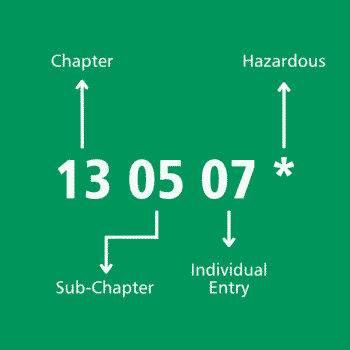
So a code like 13 05 07 * breaks down as: Chapter 13 – oil and liquid fuel waste, sub-chapter – oil/separator contents and the specific entry for oily water from oil/water separators. Codes ending in an asterisk (*) indicate the waste is classified as hazardous and needs to be handled accordingly.
There are 20 chapters in total, covering everything from mineral extraction and construction waste through to municipal waste and wastewater treatment residues. Waste producers are expected to work through the list in a set order, the general industry based chapters first, with the more generic “waste not otherwise specific” entries used only as a last resort when nothing more specific fits.
Why EWC codes matter
Getting the code right isn’t just a box-ticking exercise, if affects:
- Legal compliance – under your Duty of Care, you’re responsible for correctly describing your waste on every waste transfer note or consignment note and for making sure it goes to a facility permitted to accept that waste type
- Cost – misclassified waste can be rejected at a treatment facility or priced incorrectly if it ends up needing specialist handling
- Environmental protection – accurate classification ensures waste is treated, recycled or disposed of appropriately rather than ending up somewhere it shouldn’t
- Audit and inspection readiness – if the Environment Agency ever queries your waste records, correctly coded transfer notes are your paper trail
If you’re not sure which code applies to a particular waste stream, the UK government’s waste classification guidance is the definitive reference point and it’s worth bookmarking if your business regularly produces mixed or unusual waste streams.
Who is responsible for getting the code right?
As the waste producer, the responsibility starts with you, even if a waste management like CountyClean handles the collection and disposal on your behalf. In practise, a good waste partner will help you get the classification right, but it’s worth understanding the basics yourself so you can check what’s being recorded on your paperwork and query anything that doesn’t look right.
EWC codes in practise: what our recycling facility accepts
As an example, here’s how our waste recycling and disposal facility near Lingfield, Surrey works. This site is permitted to accept a wide range of non-hazardous waste streams, each identified by its own EWC code, including:
- Road sweeper and gully waste – common streams from local authority and commercial cleansing contracts
- Silt, sludges and slurry – including sludge from wastewater treatment and water clarification processes
- Construction and excavation waste – soil, stones and dredging spoil from groundworks and civil engineering projects
- Drilling muds and mineral processing waste – from quarrying, excavation and related industries
- Municipal and street cleaning residues – including garden and park waste and general street-cleaning materials
Every load we accept is checked against its EWC code to confirm it falls within our Environment Permit (EPR/EB3101SL), and we issue a Duty of Care certificate and weighbridge ticket for each one so you have a clear and compliant record for your own files. The facility takes waste from third parties 24/7 with prior booking and vehicle wash-out is available on site after disposal.
If you are regularly generating one of these waste streams and aren’t sure it’s being classified or disposal of correctly, it’s worth a conversation – misclassified waste is one of the most common (and the most avoidable) compliance gaps we see.
What's changing: Digital Waste Tracking from October 2026
Alongside EWC coding, the way that waste movement records are kept is also changing. Under the Environment Act 2021, Defra’s Digital Waste Tracking Service (DWTS) becomes mandatory for permitted waste receiving sites in England, Wales and Northern Ireland from 1 October 2026 (Scotland follows in January 2027), replacing paper waste transfer notes with a digital record for every load. Waste carriers, brokers and dealers come into scope in a second phase from October 2027.
This doesn’t change how EWC codes are worked out, but it does change how that information is recorded and stored. As a permitted recycling and disposal facility, we’re preparing to move our record-keeping onto the new digital service ahead of the October 2026 deadline – so the same accurate classification and Duty of Care paperwork you get today will simply move from paper to a digital record.
Getting your waste classified correctly
A few practical steps if you’re not confident you current waste coding is correct:
- Identify the source process, not just what the waste looks like. The same looking matter can have a different code depending on what produced it
- Work through the EWC chapters in order, starting with the industry-specific chapters before falling back on general entries
- Check for the asterisk. If a code is marked as hazardous, additional handling, transport and documentation rules will apply
- Keep your transfer notes and certificates on file. You are required to retain waste transfer documentation for at least two years.
- Ask your waste contractor if you are still unsure. A permitted facility should be able to confirm the correct code for your waste stream as part of the booking process
How CountyClean can help
Whether you need a one-off collection or an ongoing contract, we handle waste classification, transport and disposal in full compliance with UK regulations.
- Waste recycling and disposal facility – non-hazardous waste streams accepted 24/7 by prior booking
- Liquid waste collection and disposal – for sludges, slurries and liquid waste streams
- Hazardous waste collection and removal – for waste streams requiring specialist handling
- Road sweeper hire services – one of our most common waste streams processed at the recycling facility
To discuss your waste stream or book a collection, call 01323 741818 or get in touch through our contact form.
Frequently Asked Questions
European Waste Catalogue, the standardised six-digit coding system used in the UK to classify all types of waste by source and category.
Start with the government’s waste classification guidance, which sets out the process for identifying the correct code. If you’re unsure, your waste management company should be able to confirm the code as part of arranging collection.
If can be rejected by the receiving facility, cause delays and extra costs and puts you at risk of a Duty of Care breach if it results in waste being handled or disposed of inappropriately.
It helps but it’s not essential. A reputable waste management company will confirm the correct classification with you as part of the process.
No. Digital Waste Tracking changes how waste movements are recorded, from paper transfer notes to a digital system, not how waste is classified. You’ll still need the correct EWC code for every load, it’ll just be logged digitally rather than on paper from October 2026 for permitted receiving sites.